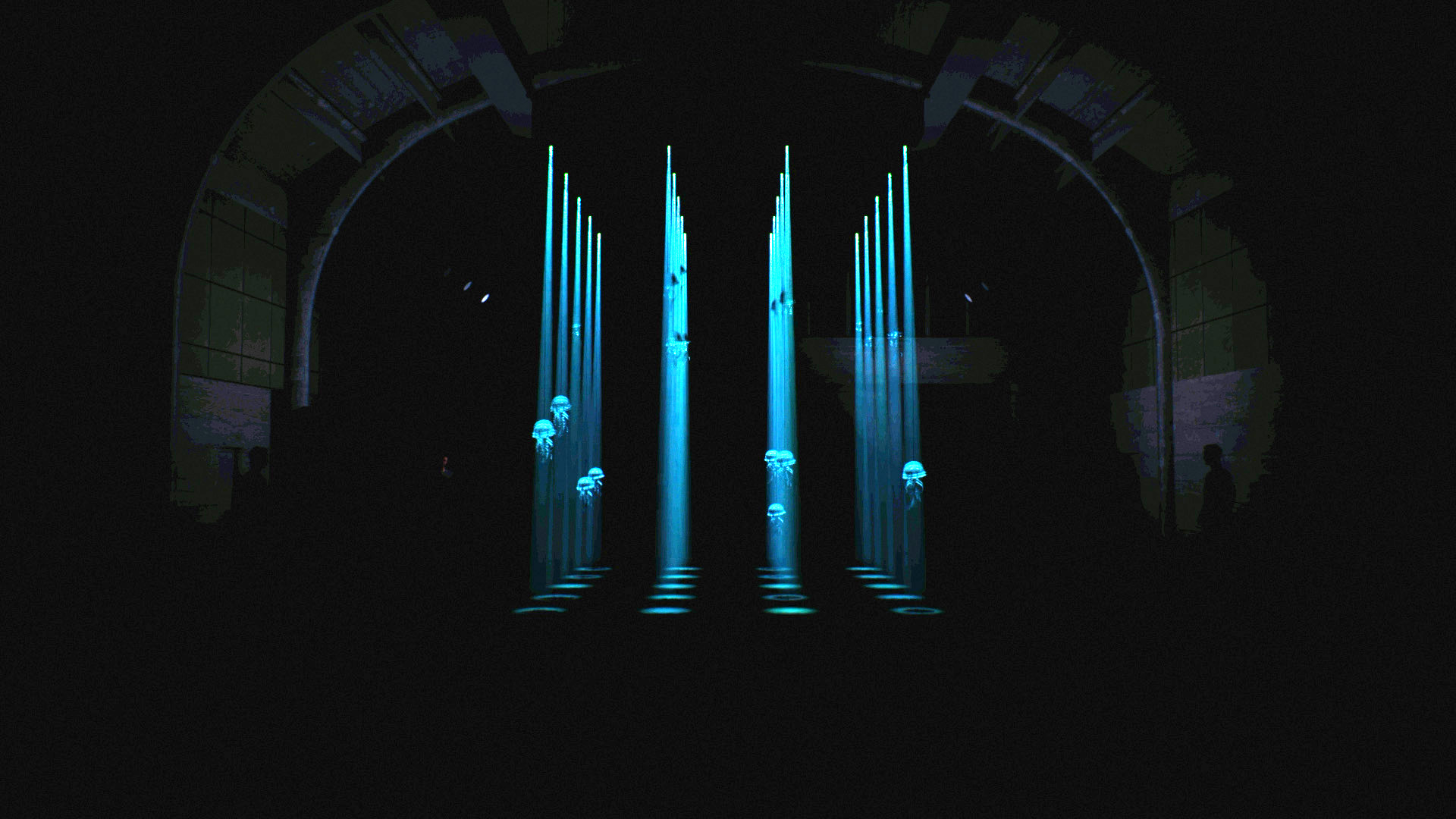
Alexis Choplain (FR)
Alexis Choplain uses electricity as the primary material in his works and explores machine poetry. He studied architecture and was influenced by the DIY mentality of Mexican artists. His custom-built synthesizers manifest electrical choreographies in his installations. Mistakes and discoveries are driving forces; the form continuously evolves through intuition. Art as an experiment that doesn't yet know itself.
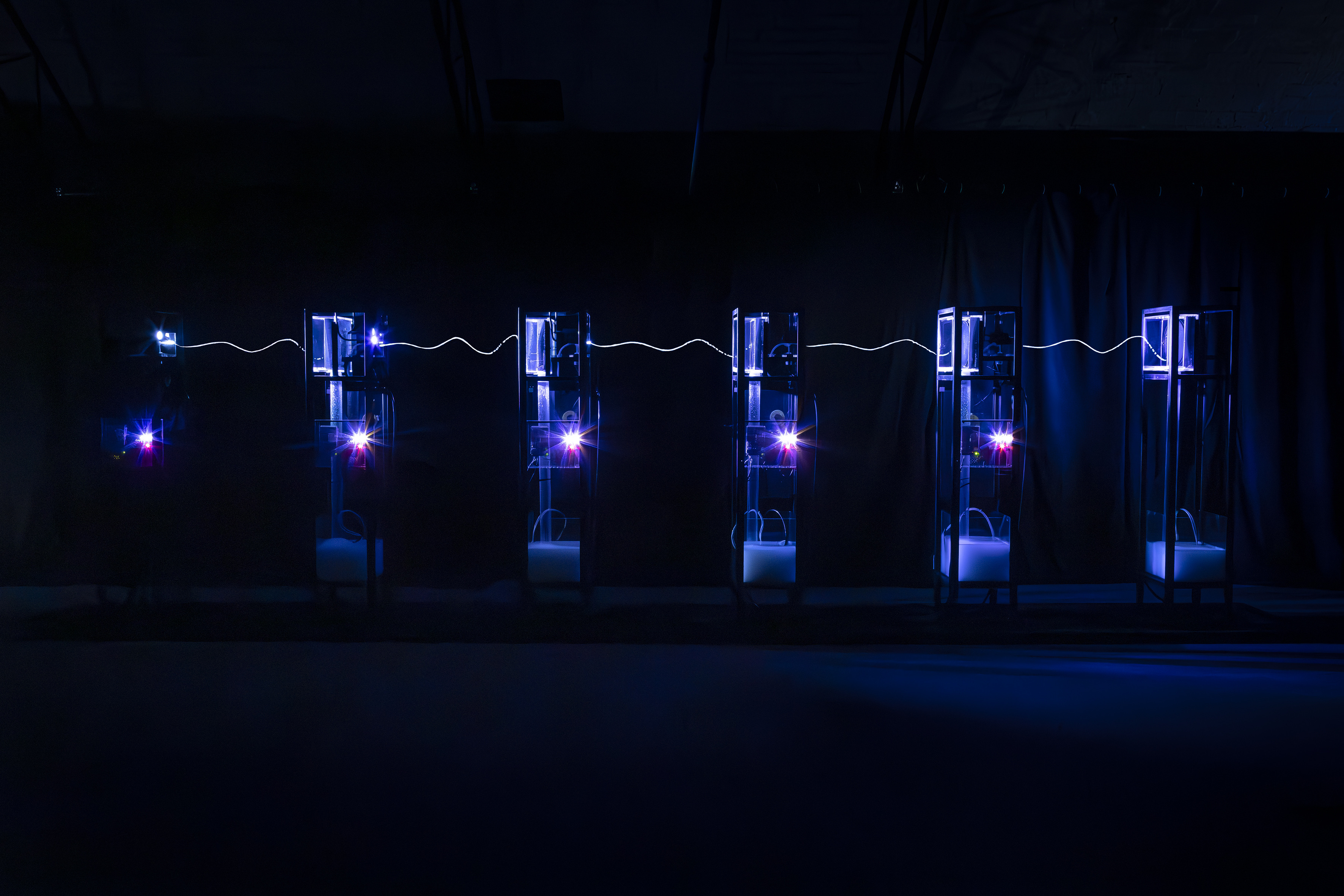
Boris Acket (NL)
Boris Acket, born in Amersfoort in 1988, is a Dutch artist and composer based in Amsterdam. His roots are in electronic music and club culture – from which he has developed a practice that blurs the lines between art and entertainment and raises dystopian questions about our relationship with the environment. At its core is the tension between control and surrender: sound, light, and movement are woven into collective experiences. His works have been exhibited worldwide, from the Stedelijk Museum to Paris Fashion Week – art as a refuge amidst an overwhelming world.
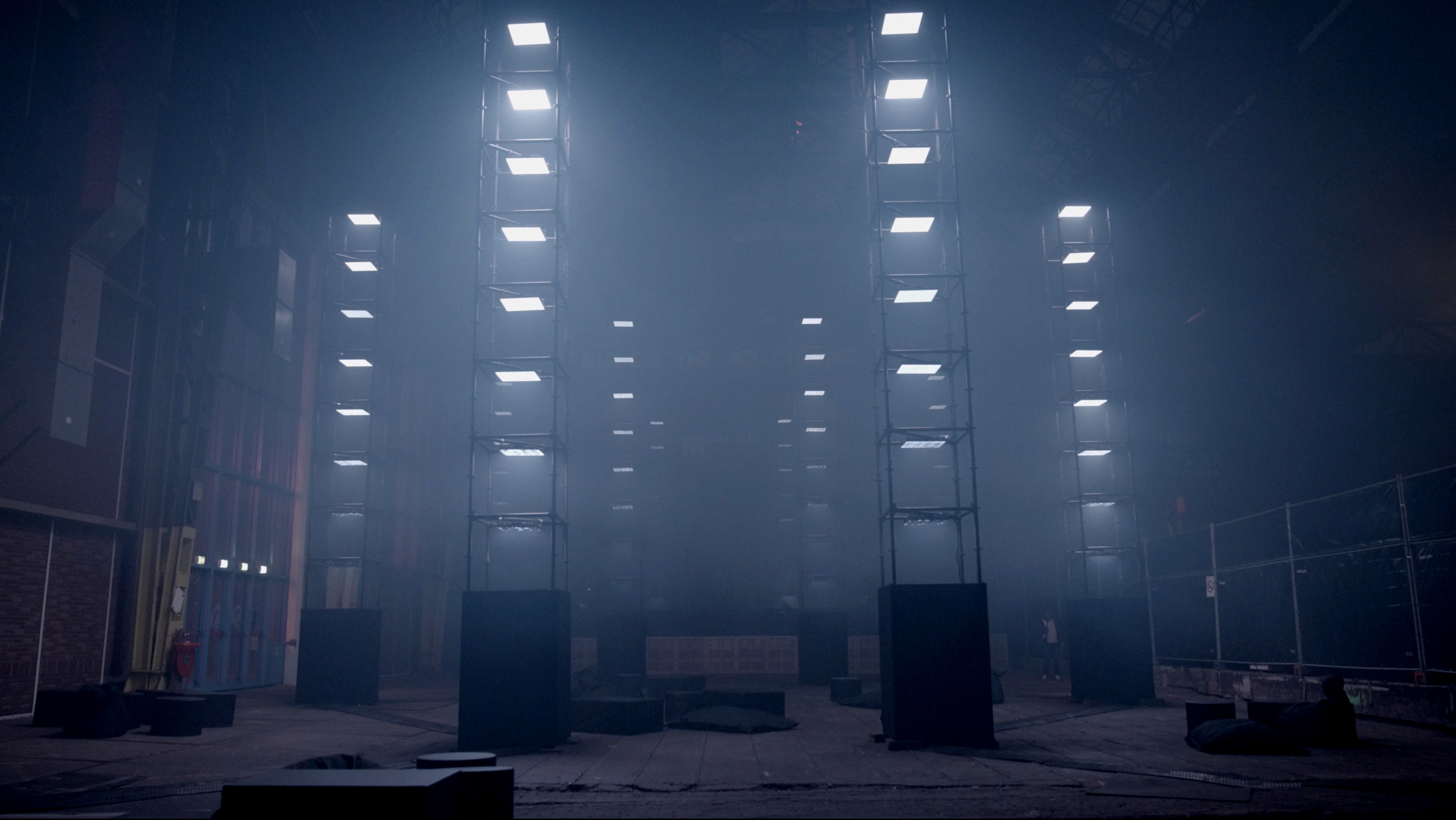
Corey Schneider (DE)
Corey Schneider is a Berlin-based multimedia artist from Australia. He works with spatial sound, light, and kinetic sculpture, using generative systems as his medium. Code and custom-developed technologies shape his immersive installations. This results in unexpected structures and dynamic audiovisual compositions. The focus is not on the technology itself, but on cohesive narrative experiences. Schneider views the development process itself as part of the artistic expression. His installations create constantly evolving, sensory environments.
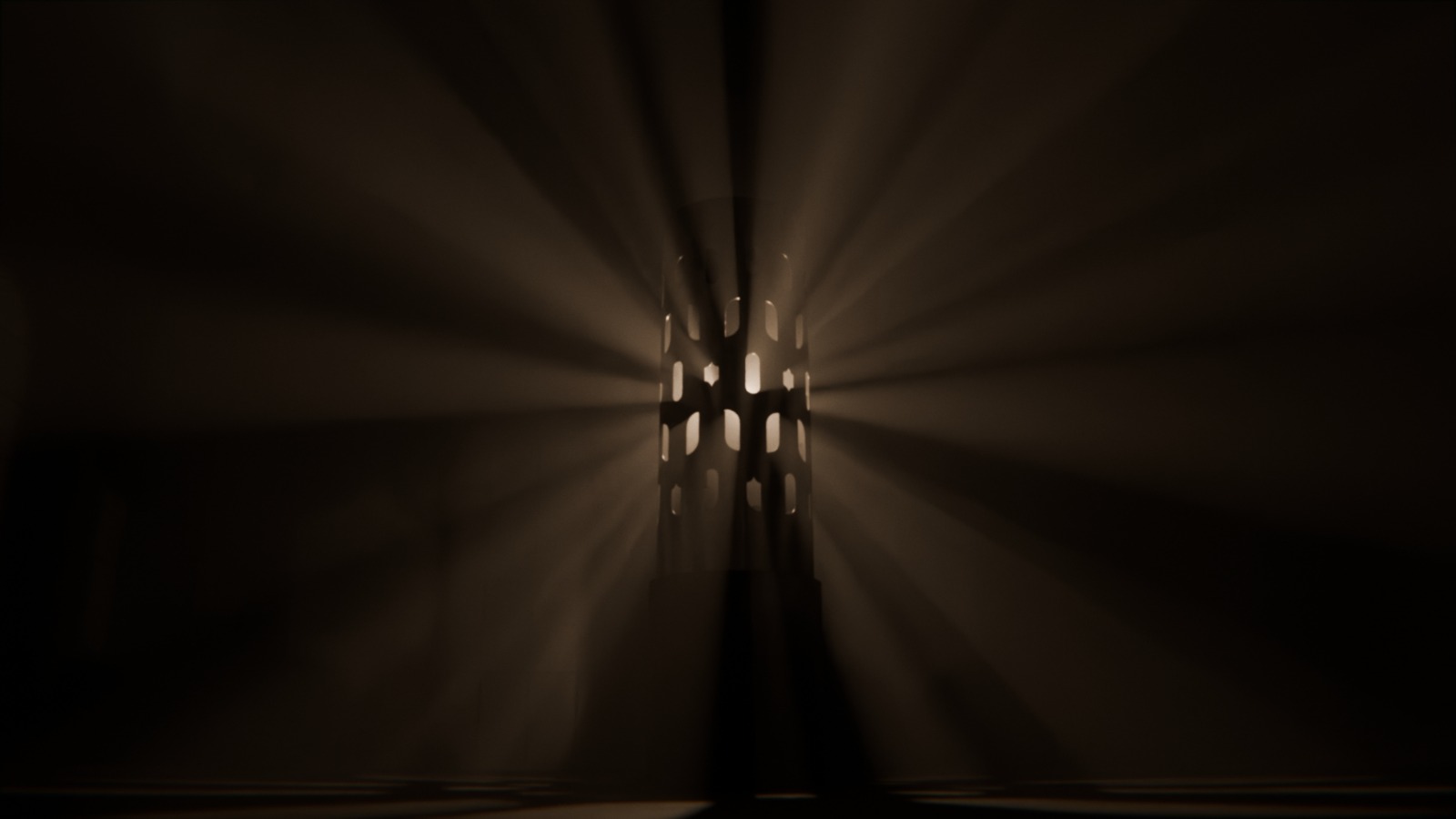
Cristian Rizzuti (IT) + Julian Alvarez (ES, composer)
Cristian Rizzuti is an Italian interactive media artist based in Barcelona, whose work explores the intersection of light, perception, and technology. He has presented his works in significant institutions, including the ZKM Karlsruhe, the MAXXI Museum in Rome, and the Venice Biennale.
Always inspired by science and mathematics, Rizzuti explores the role of human perception and the definition of synesthetic spaces – his works can be described as light sculptures. His most renowned work, Amnesia, encapsulates all of this: an immersive installation presented as a five-part painting performance, where UV lasers interact with phosphorescent pigments to create real-time audiovisual compositions – which become visible, pulsate, and then disappear, much like memory itself.
Julián Álvarez is a musician and physicist based in Barcelona. As a musician, he is a performer and an accomplished audiovisual composer working in film, advertising, and installations. He has performed at festivals such as Primavera Sound, Sonar, and BBK, among others, and has composed music for award-winning short and feature films selected for major events like the Oscars and the Goya Awards. Additionally, he has worked on advertising campaigns for major international brands.
As a scientist, he has worked on acoustic designs in collaboration with renowned architectural firms across Europe. He is an associate professor of architectural acoustics at the Polytechnic University of Catalonia and is currently pursuing a doctorate on sound diffusion in an architectural context.
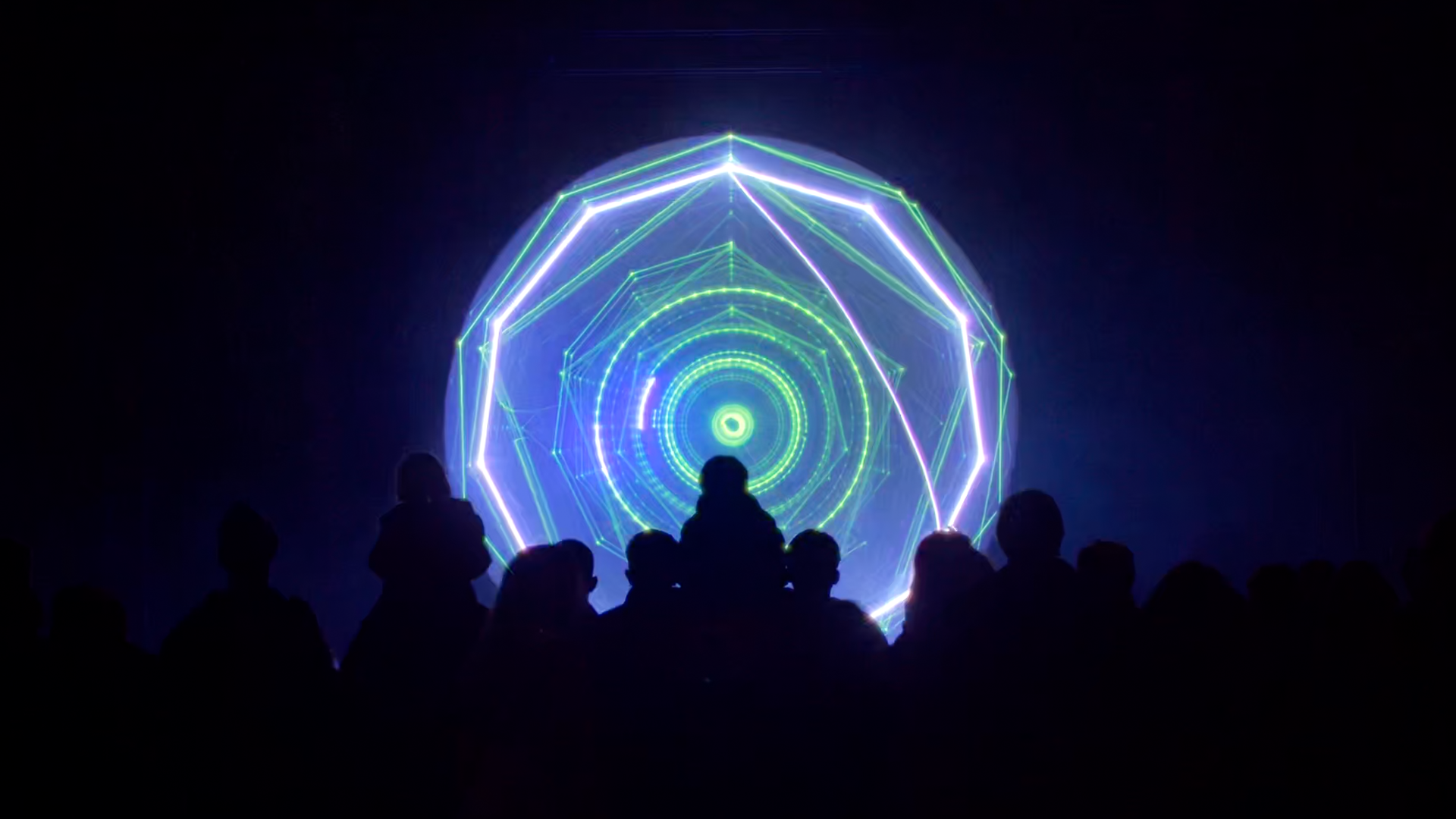
Encor Studio (CH)
Encor Studio was founded in 2016 by Mirko Eremita, David Houncheringer, Manuel Oberholzer, and Valerio Spoletini. The collective combines CGI, live-action direction, and experiential design to create immersive worlds. Central to their approach is radical reduction: ‘Subtractive Art’ – the removal of elements to reveal the beauty of what remains, often just glass, electricity, and light. They make hidden information palpable – offering a fresh perspective on a world that largely remains a mystery.
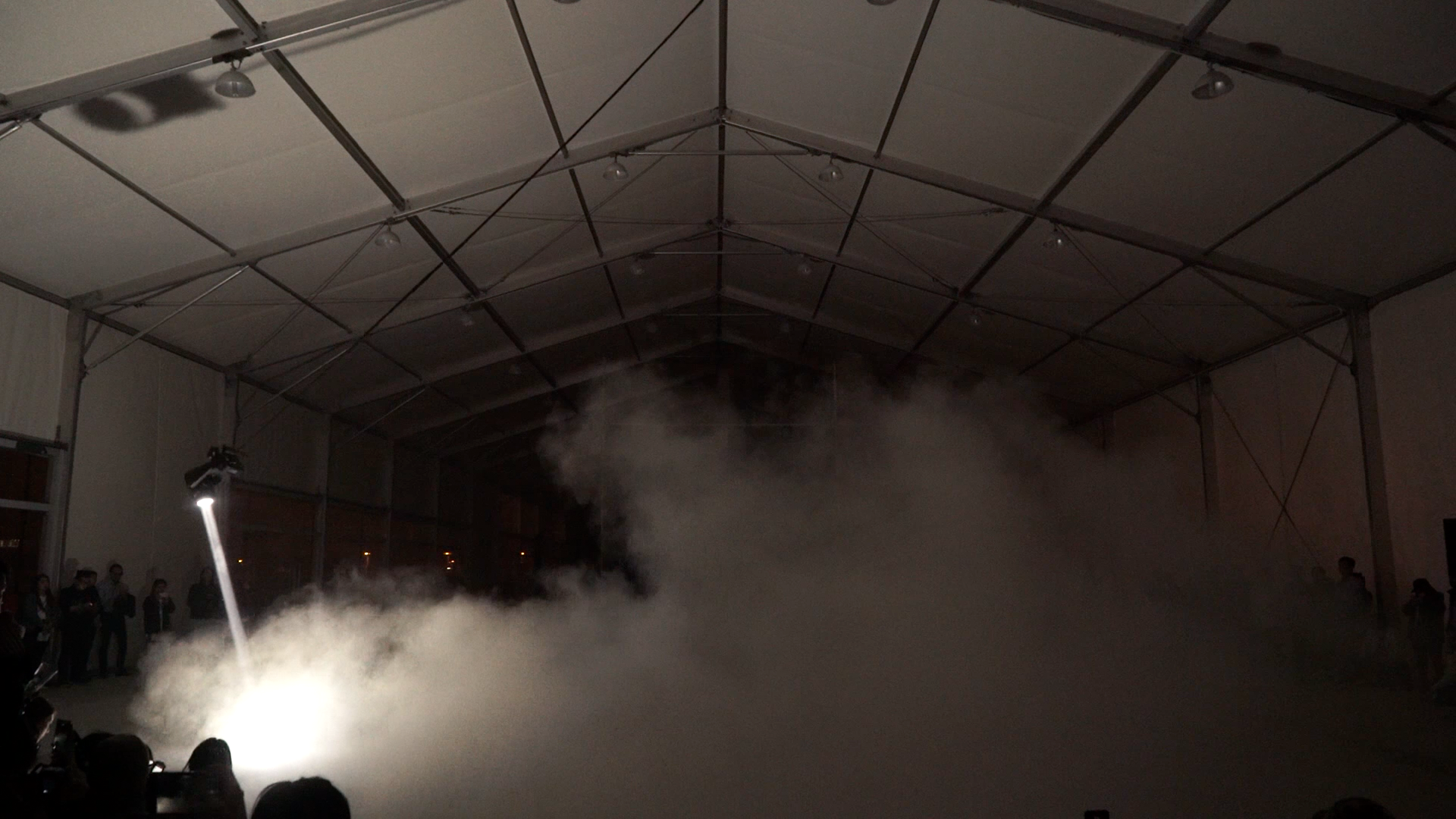
Joris Strijbos (NL)
Joris Strijbos creates kinetic installations where machines, algorithms, and the physical world interact. His works are modeled after biological systems – self-organization, swarm intelligence, and emergent processes are translated into abstract light and sound choreographies. Viewers experience live how machines and programs independently make "decisions" – art that breathes like an organism.
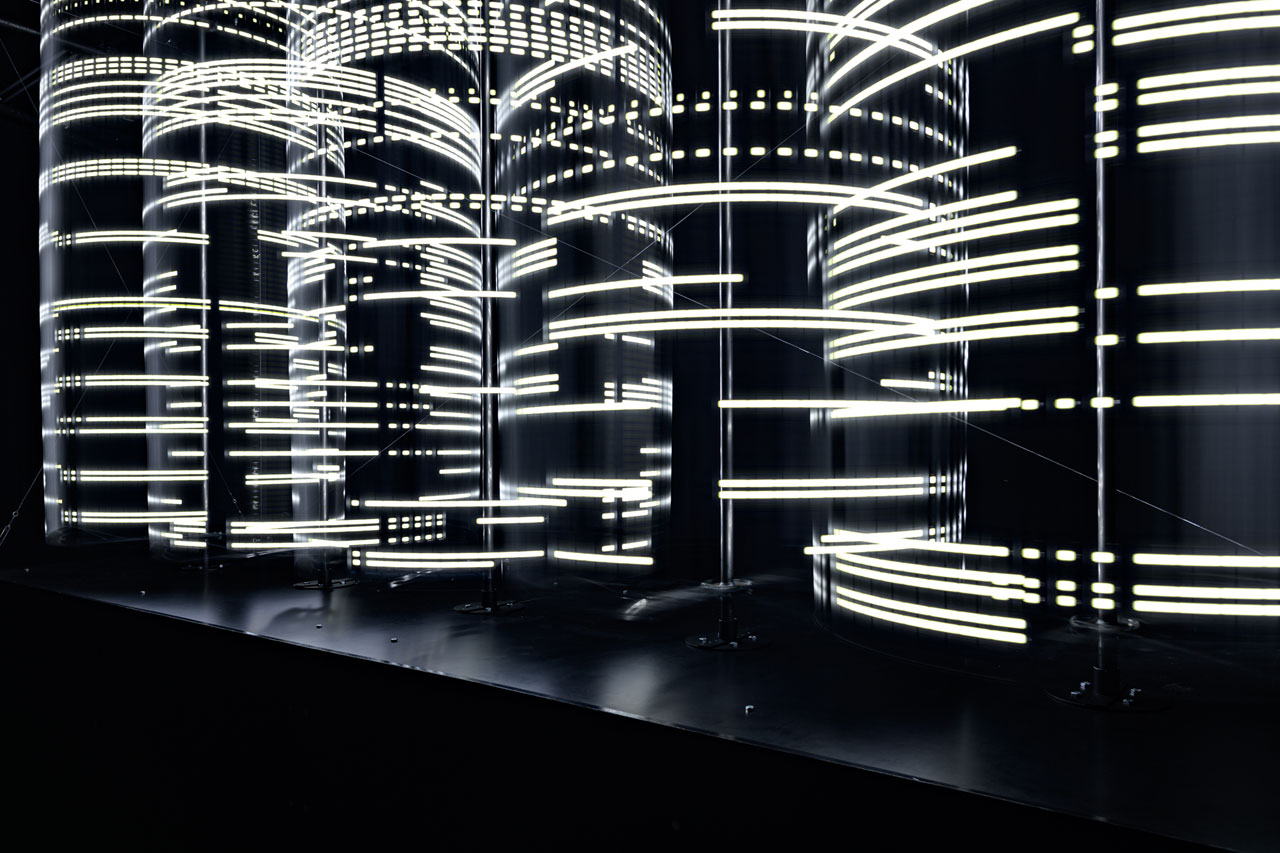
Lumus Instruments (NL)
Lumus Instruments is an Amsterdam-based studio, led by Timo Lejeune and Julius Oosting. They combine technology and art on a scale that feels both industrial and intimate. The name is derived from Lumen (light) and Ludus (play). In their Polynode series, they explore the interaction of digital systems with physical spaces and how humans and technology can coexist in the future. Light becomes a tool for thought.
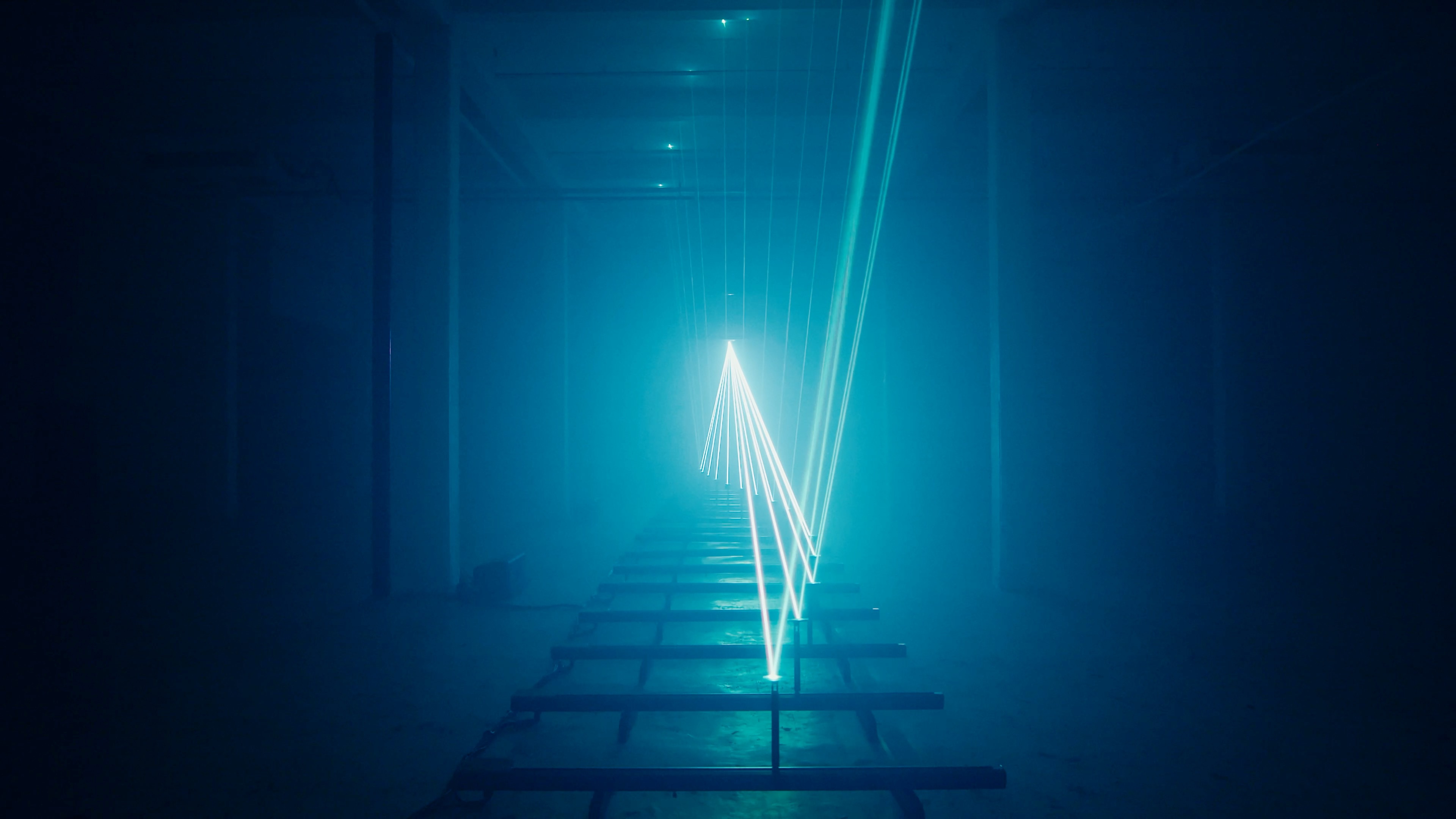
Sputniko! (JP)
Sputniko! (Hiromi Ozaki) is a Japanese-British artist, designer, and filmmaker. Her interdisciplinary practice spans art, technology, and science. In her work, she combines speculative design with pop cultural narrative forms.
Central themes include gender, body, identity, and the societal impact of new technologies. Sputniko! often develops fictional future scenarios and functional prototypes. These make potential technological developments tangible and stimulate discussion.
Her works include films, music videos, and multimedia installations. They are often created in collaboration with scientists and researchers. Her work has been exhibited internationally in renowned institutions. Sputniko! uses art to question existing norms and design alternative futures.

Sven Sauer (DE) & CEYYS
Sven Sauer lives and works as an artist in Berlin. He gained recognition for his work as a matte painter for international film productions – including works by Lars von Trier, J.J. Abrams, and Martin Scorsese. His accolades include three Emmy Awards for "Game of Thrones" and an Oscar for "Hugo Cabret." In his installations, Sauer searches for hidden traces of hope in our reality – as a measurable phenomenon, substantiated by data, statistics, and scientific studies. He confronts his viewers with the problems of our time without advocating a fixed opinion – art as an open question.
CEYYS is a Berlin-based artist duo at the intersection of music, technology, and visual art. Their practice combines electronic composition with generative processes. At its core is synchronicity: systems react to each other, forming constantly evolving audiovisual spaces. Their works appear both precise and emotional – where digital logic and human perception meet. Art as a resonance chamber between control and chance.